http://today.moneyweb.co.za/cfo-article?id=560249#.WEQfimxMo2w
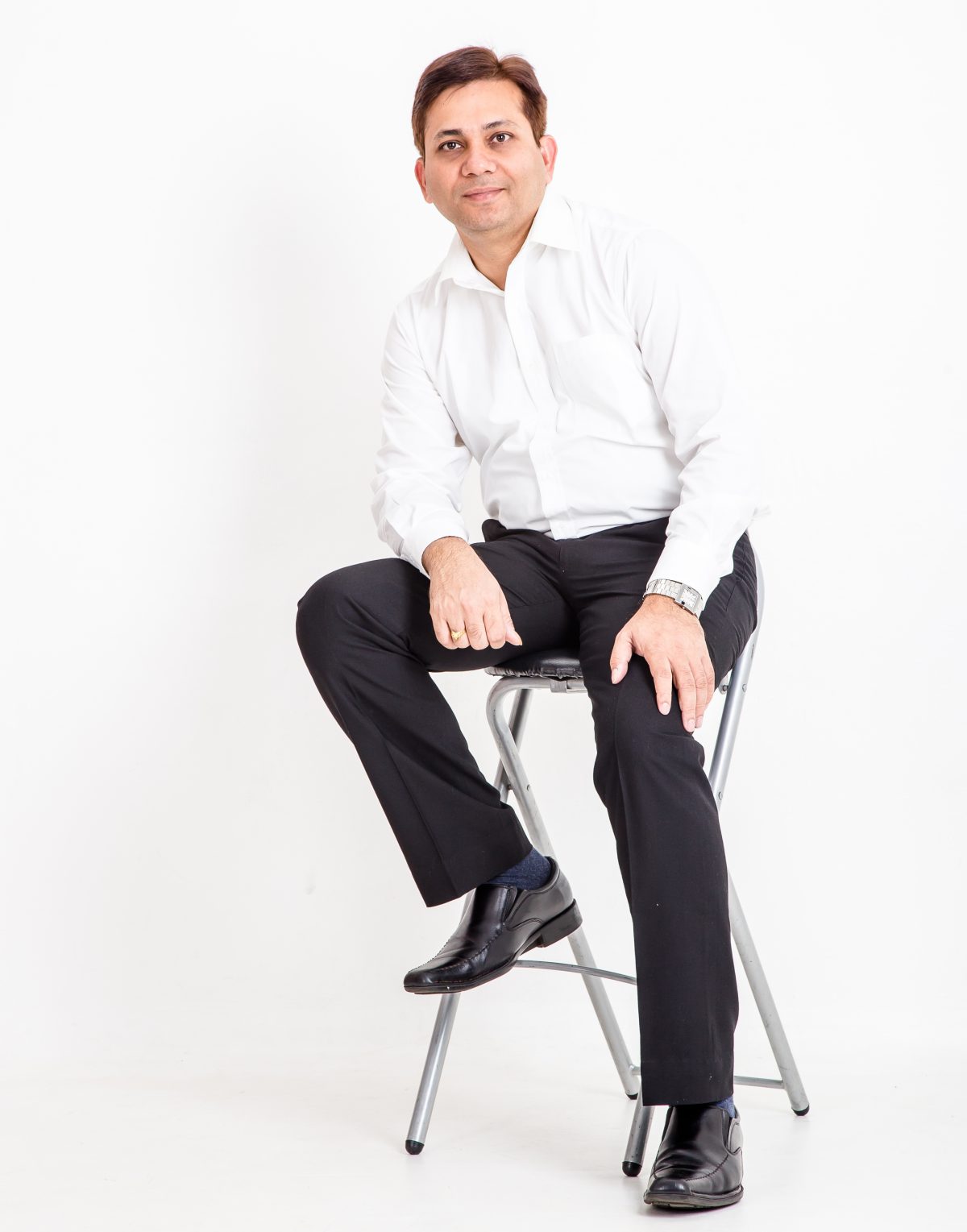
A conversation with Bikash Prasad always includes exclamations like “I am passionate about Africa” and “we are very bullish about the continent”. The finance wizard, nominated for the 2015 CFO Awards, readily dishes up facts and figures about Africa’s economic opportunities. “Olam’s investment in Africa in the last five years is over a billion dollars. It is humongous.”
When Bikash took over the CFO role for agri-business Olam International in Southern and East Africa three years ago, things were tough. He restructured the existing operations in the region, closed down tail profit centres and managed to reduce overheads and risk exposure. The capital released as a result was reallocated to expand the value chains through organic and inorganic investments to balance the product portfolios in the region. Bikash also modernised IT and localised the finance teams in African countries, getting rid of superfluous expats. Being active in the agri-sector, Bikash believes Africa is the world’s food provider of the future with “young people, urbanisation, the rich mineral resources and better governance” the key to the continent’s potential.
Having joined Olam in 2006 in Cameroon before moving to Ghana as finance head for West Africa three years later, Bikash knows what he is talking about. He moved to Durban in 2012 to head up South and East Africa and since July he is CFO for Africa. Bikash is a longtime supporter of CFO South Africa, so we were extremely happy to speak him at length about his role at Olam, his approach to change management and the ups and downs of investing in African countries.
What were the challenges when you moved down to South Africa for Olam International?
“When I took over the regional CFO role for South and East Africa three years ago, the region was going through extremely tough times due to high dependence on cotton with prices at rock bottom. We had lost people at senior finance level, had extremely high operating leverage and an expat-dependent structure. Our systems were still catching up to support our new business models and not many businesses were very attractive.”
“After understanding this, I immediately started the strategy recalibration exercise along with the business heads and came up with a restructuring plan that involved exiting tail and non-performing profit centres, reducing overheads and reducing risk exposure. As difficult as these decisions were, we are already seeing the benefits of our strategy for the overall growth in value of the company. After implementing the changes, all the regional clusters have been turned around.”
Changes are often met with resistance. What were the toughest decisions you had to take?
“I had to convince the team to let go of 20 expats, 200 local staff and 5,000 temporary workers. It was a difficult period, but it helped in bringing down the overheads by 35%. The second tough decision was to start a localisation drive. We were very expat driven in pockets, but I find it very important for continuity and stability to have national talents.”
How have you gone about changing your finance team?
“I have actively tried to nationalise my finance teams and have created an African talent pool which we are constantly adding to through our various initiatives, like our Africa finance trainees programme. These trainees have now become managers and have also been afforded the opportunity to work in different countries in our region. This expands their skill set, but also brings in fresh new ideas, experience and sets of skills into our finance teams.”
“Over the last two years I have consolidated my finance team and geared it towards a more regional focus, allowing for cross sharing of skills and experience which has positively impacted all our businesses and the region as a whole. I have completely standardised reporting, systems and processes across the countries. I insist on market visits for all the finance team members, so they can develop better business understanding.”
What improvements can still be made?
“We aim to stay ahead of the game and have already started to build an Africa-wide tax function, where we are implementing processes and controls which may not currently be on individual countries’ tax agendas but which we believe will eventually top the list in the next five to ten years. We are also in constant conversation with the Big Four accounting firms to understand the key trends on the continent and which tax regimes are the most well-structured and efficient, so that we are geared towards the changing tax environments in each of the economies in which we operate.”
What is the role of technology in your finance team?
“It is very important, especially with our current value chain expansion. We have successfully implemented SAP in South Africa, Cameroon, Ghana, Senegal and Mozambique and are laying it out in the rest of the region. We believe these systems, which are linked to our BI platforms, will contribute significantly to the quality of our data and analysis which will allow us to constantly maximise our efficiency and add value to the company and its decisions.”
What is your recipe for success?
“I believe in standardising processes and reporting, because it makes reviews easier and more effective. I like working with teams, but also have a very good technical understanding myself. Before I go to sleep each night I spend 45 minutes reading about things like accounting and best practices. I interact a lot internally and externally. All of that improves my understanding and learning.”
You handle M&A, joint ventures and green field projects for Olam, making you almost a chief strategy officer. What are the prospects in Africa?
“Africa is a strong pillar for Olam’s business with invested capital of multi billions. Africa has 60% of available cropland in the world and higher GDP growth compared to developed economies. The rising middle class presents an opportunity for customer facing industries, which is why Olam has invested in packaged foods. I think the high percentage of young people, urbanisation, the rich mineral resources and the attempts towards better governance are holding the key for Africa.”
“Africa is poised to become the food producer for the world. Having the lowest yield currently compared to other producers globally – only 25% of total potential yield on average as compared to 90% in East Asia – there is an opportunity to maximise yields and production through upskilling agronomics, improved fertiliser application, technological innovation and PPP. Corporate farming firms will increasingly support small holders, thereby reducing poverty and improving farm productivity, which is very low today. As Olam we do this for many crops, including coffee, rice, rubber and edible nuts.”
“Our biggest successes are probably flour milling, packaged foods business and plantations. We bring the best technology in the world and get the best teams. Our sourcing capability and risk management are unparalleled.”
How do you keep up-to-date with opportunities and pitfalls in Africa?
“We operate in 24 countries in Africa and we work very closely with tax authorities and governments. We try to understand what their priorities are. I also subscribe to various publications and speak with various stakeholders across Africa on a regular basis, such as bankers, business managers and finance managers. I also attend and actively participate in various trade and finance conferences, CFO conferences across the continent and internationally, where topics related to our business are discussed.”
How have you organised your African finance function?
“We have four clusters: Eastern, Central, Mozambique and South Africa. They have cluster CFOs and the senior leadership comprises of 25 people. We now have a healthy mix of nationals and expats. Our routine accounting and reporting has been outsourced to Olam Global Business Services in Chennai, India. This allows my team to focus on value-adding roles and to become a trusted business partner.”
What misunderstandings do South African CFOs have about investing in other African countries?
“If you talk to CFOs, the perception is that infrastructure is very bad, but it is actually quite good compared to many other places in the world. There is also the often-repeated fear of huge amounts of corruption, security issues and political insecurity. Many of these fears are exaggerated. Corruption risks, for example, are entirely different per country. In countries like Ethiopia it is not bad at all and in other countries you can actually help governments fight corruption. In Ghana, for example, Olam has come with suggestions to curb illegal trade.”
Which three African countries would Bikash invest in?
“I would choose Gabon, Ivory Coast and Ghana. The new government in Gabon is very pro-investment. They are looking to diversify from oil, gas and timber. They are really promoting investments. As Olam we have established a special economic zone with them with all sorts of tax holidays. The opportunities are mind blowing. Ivory Coast might look scary from the outside, because of the recent political unrest, but inside the country there is a good climate for investors. Ghana also remains a good destination. While there are some economic challenges in the last few years, it is a great country with very friendly people and a pro-business climate.”
 After starting his career in India (his land of birth) and working with companies like Unilever and Asian Paints, Prasad moved to Nigeria ten years ago to work for Nulec Industries. In 2006 he joined Olam International as Country Finance Controller in Cameroon and he hasn’t looked back since. “In 2009 I moved to Ghana as Cluster Financial Head for West-African countries and, in September 2012, I moved down to Durban and assumed my current position,” Prasad explains. “My most important roles include identifying and supporting opportunities for sustainable growth, corporate governance, developing talent and working with various internal and external stakeholders.”
 Olam not only signals the problems and the potential, but also plays an active role in helping Africa move forward and making sure various countries learn from each other’s experiences. “We are into upstream farming for rice, coffee, edible nuts, palm and rubber and midstream processing for products like cocoa, cashew, wheat, crude oil and so on. We are also active on downstream and distribution operations. We are participating in various parts of the value chain and also see it as our responsibility to spread good agronomical practices.”
 EcoFin Blogger (Bikash Prasad)